In this guide
Key Takeaways
- Bread types are more usefully compared by structure, flavour profile and intended use than by category label alone.
- Use case usually separates options more clearly than labels, especially when choosing between sourdough, sandwich loaves and general everyday bread.
- The most practical specifications to compare are flour composition, hydration, loaf format, crumb structure, crust thickness, fermentation method and typical sliced thickness.
- Sourdough stands out for structure and flavour development, but that does not make it the right fit for every routine.
- The most useful buying approach is to decide which trade-offs in texture, slicing and day-to-day use suit how you eat bread.
Overview
Bread varies more by structure, flavour profile and intended use than by category label alone. A sourdough loaf, a standard sandwich loaf and an everyday white or wholemeal bread can all overlap in purpose, but they behave differently once slicing, toasting or storing comes into the equation. For comparison, sourdough is often chosen for a chewier crumb, a more developed crust and a tangier taste, whereas softer sandwich loaves prioritise uniform slices and a lighter bite. Everyday breads tend to sit between those two points, offering broader versatility rather than a strongly defined texture or flavour.
Texture is one of the clearest dividing lines. A firmer, more open crumb can suit toast, soups and toppings because it holds structure well, but in contrast it may be less convenient for tightly packed sandwiches or children’s lunches. Sandwich bread usually trades crust character for softness and consistency, which makes it easier to slice thinly and fill evenly. By comparison, everyday loaves are often selected for routine use across toast, simple sandwiches and table bread, even if they do not excel in one specific role.
Flavour also affects how flexible a loaf feels in daily use. More pronounced acidity or grain character can add interest, particularly with savoury fillings, yet it can compete with milder toppings. A neutral loaf is less distinctive, but that can be an advantage when the bread is there to support rather than lead. Wholemeal options typically bring a denser texture and fuller taste than white loaves, whereas white bread generally offers a softer crumb and broader appeal for mixed households.
Shelf life and freshness are practical considerations as well. Bread with a robust crust may keep its character differently over a day or two, while softer loaves can be more immediately convenient but may stale or compress more noticeably in use. Sliced formats favour speed and predictability; unsliced loaves can offer more control over portion size and thickness. The more useful comparison, then, is not simply artisan versus everyday, but which loaf aligns with how it will actually be eaten: toasted, filled, torn, dipped or used across several meals.
Feature Comparison
The key differences between bread types are usually easier to assess by use case than by label. A comparison table works best when it separates crust, crumb, flavour, keeping quality and suitability for fillings or toasting, because those factors affect day-to-day performance more than broad category names.
Sourdough typically stands out for a firmer crust and a more open crumb, whereas standard sandwich loaves are usually softer, more even in texture and easier to slice uniformly. That makes sourdough better suited to those who want chew, structure and a more pronounced flavour, but less convenient where very neat sandwiches are the priority. By comparison, a classic sandwich loaf tends to hold spreads and fillings more predictably, especially for packed lunches.
Wholemeal and seeded loaves often score differently again. In contrast with white sandwich bread, they usually offer a denser crumb and a more assertive flavour, which can pair well with savoury fillings but may feel heavier for everyday light sandwiches. Their texture can also affect how easily they fold or compress, which matters if portability is important.
For toasting, the table should highlight how sugar level, moisture and crumb density influence browning. Brioche-style or enriched breads generally brown faster and produce a softer bite, whereas leaner loaves often toast drier and crisper. That distinction matters if the bread is intended equally for breakfast toast and for sandwiches later in the day.
Keeping quality is another useful point of comparison. Some crusty loaves remain appealing for longer because they can be refreshed by reheating, while softer packaged breads may stay sliceable for longer but lose texture differently. Neither is automatically more practical, it depends on whether the priority is fresh eating quality or convenience over several days.
Portion size and slice format also belong in the table. Taller artisan loaves can deliver more variation from end slice to centre slice, whereas machine-cut loaves are more consistent. For shoppers comparing everyday options, that consistency can be as important as flavour, particularly where the bread is used across multiple meals rather than for one specific purpose.

Technical Specifications
Across common bread types, the most useful specifications are flour composition, hydration, loaf format, crumb structure, crust thickness, fermentation method and typical sliced thickness. These factors affect texture, shelf life, toast performance and how well a loaf handles fillings.
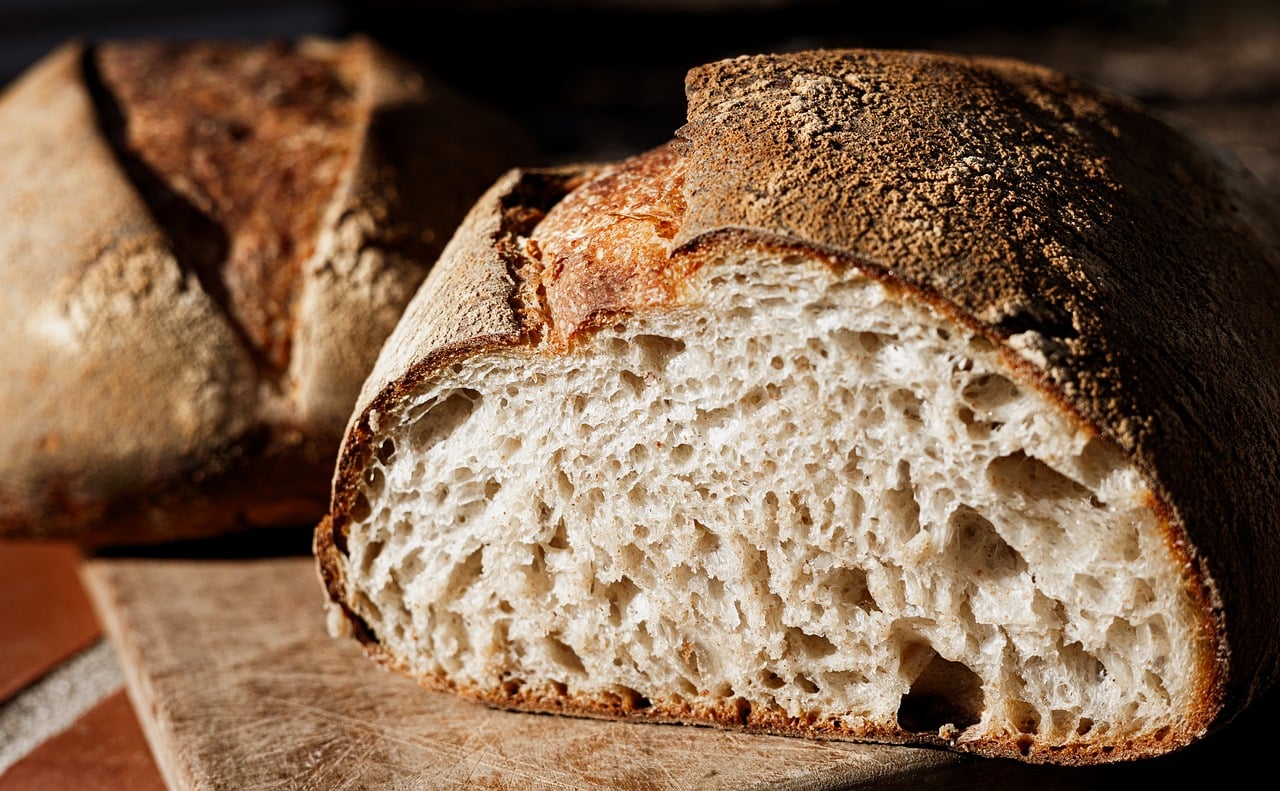
Sourdough is defined primarily by fermentation method rather than shape. It uses a natural starter, and by comparison with standard yeasted loaves it often has a more open crumb, a firmer crust and greater variation between bakers. That open structure can improve chew and flavour development, whereas it may be less practical for very wet sandwich fillings because larger holes allow more seepage. Hydration is often higher in sourdough-style loaves, which supports irregular air pockets but can make slices less uniform.
Sandwich bread is usually built around consistency. In contrast with sourdough, the crumb is generally finer and more even, the crust thinner, and the loaf shape more regular for predictable slices. This matters if you want uniform toast, neat sandwiches or easy portioning. A tighter crumb also holds spreads and sliced fillings more cleanly, whereas it tends to offer less textural contrast than a crustier loaf.
Wholemeal and seeded loaves introduce another specification issue, flour extraction and inclusions. Higher wholegrain content usually gives a denser crumb and a more robust flavour profile than white bread. Seeds can add texture and visual variation, but they also change slice cohesion and may increase surface shedding when cut. By comparison, plain white loaves are often softer and lighter in structure, though they may feel less substantial for some uses.
Loaf format also matters. Tin-baked bread tends to produce straighter sides and more uniform slices, whereas free-form loaves often develop thicker crusts and less predictable dimensions. For everyday use, that difference affects storage, sandwich assembly and toaster fit as much as flavour. Pre-sliced bread offers convenience and portion consistency, in contrast with unsliced loaves, which give more control over thickness for toast, sandwiches or serving alongside soups.
For comparison purposes, these technical differences are more informative than category names alone. Two loaves labelled similarly can perform quite differently if fermentation, crumb density or slice format are not alike.
Strengths and Weaknesses
Sourdough’s main advantage is structure and flavour development. Longer fermentation typically gives it a more open crumb, a firmer crust and a tangier profile than standard packaged loaves. That makes it well suited to toast, soups and fillings that benefit from a bread with more chew and resilience. The trade-off is practicality. A very open crumb can be less convenient for spreads or runnier sandwich fillings, and a thicker crust may not suit those who want a softer bite.
Standard sandwich bread is usually the most straightforward option for consistency and ease of use. Its softer crumb, thinner crust and more regular slice shape make it predictable for packed lunches, toast and everyday sandwiches. By comparison with sourdough, it tends to compress less unevenly under fillings and is often easier to portion. Its weakness is that it can offer less textural contrast and less pronounced flavour, particularly if the loaf is designed primarily for softness and uniformity rather than character.
Wholemeal and seeded loaves often add a denser texture and a more assertive flavour profile. For some uses, that is a strength. They can pair well with savoury toppings and may feel more substantial as part of a meal. In contrast, the same density can make them less versatile if you want a neutral base for a wide range of fillings. Seeds and grains can also affect slicing neatness and crumb cohesion, depending on the loaf format.
Brioche-style or enriched breads stand apart because softness and richness are central to their appeal. They can work particularly well where a tender crumb is more important than crust or chew. Whereas sourdough often adds contrast to a filling, enriched bread is more likely to soften the overall texture. That can be useful for burgers or delicate sandwiches, but less suitable if you want the bread to hold up against moisture or provide a crisp toasted edge.
For everyday use, the main weakness across all types is specialisation. Bread that excels in one context often gives something up in another, whether that is crust, softness, slice regularity or flavour intensity. The more closely a loaf is matched to the intended use, the fewer compromises it tends to involve.


Our Verdict
For buyers choosing between sourdough, sandwich loaves and more general everyday bread, the most useful question is not which type is broadly better, but which compromises suit your routine. Sourdough typically offers a firmer structure, more developed flavour and a crust that stands up well to toasting or open sandwiches. In contrast, that same crust and chew can make it less convenient for packed lunches, quick slicing or softer fillings.
Sandwich bread usually prioritises uniform slices, a softer crumb and easier handling. That makes it the more practical option where consistency matters, especially for toast, children’s lunches or stacked fillings. Whereas sourdough often brings more variation from loaf to loaf, sandwich loaves are generally chosen for predictability. The trade-off is that they may offer less crust contrast and a less pronounced fermentation character.
Everyday bread sits between those two poles. By comparison with dedicated sandwich loaves, it may have a little more texture or crust, but without the density or assertive flavour some sourdough loaves bring. That middle ground can make it the most flexible choice for households that use bread across several occasions rather than for one specific purpose. The compromise is that it may not excel in any single role to the same degree as a more specialised loaf.
If your priority is flavour, crust and a loaf that works well for toast, soups or simple toppings, sourdough is often the more suitable fit. If ease of use, soft texture and regular slices matter more, sandwich bread is usually the clearer match. If you need one loaf to cover breakfasts, lunches and general table use without leaning too far in either direction, everyday bread is often the more balanced option.
The most sensible comparison point is your actual usage pattern. A loaf that performs well for open sandwiches may be less useful for lunchboxes, whereas one designed for softness and uniformity may be less satisfying where texture is the main consideration.
The main decision factor is how the bread fits your routine, especially the balance you want between flavour, structure and day-to-day convenience. Sourdough stands out for fermentation character and crumb structure, while sandwich loaves and everyday bread usually make more sense when consistent slicing, softer texture or broader versatility matter more.