In this guide
Key Takeaways
- Daily use matters as much as headline support, because the right mobility aid must fit how it will be used in everyday routines.
- Walking sticks differ more in fit and function than their simple design suggests, so small specification changes can affect comfort and support.
- Rollators reduce walking effort by allowing the user to push the aid rather than place body weight through a single point of contact.
- Crutches are better suited than walking sticks when one leg needs to be offloaded more substantially.
- Walking frames are usually more suitable than walking sticks when greater side-to-side stability is needed.
What to Look For
Daily use matters as much as headline support. A mobility aid that suits your strength, balance, home layout, and typical journeys is more likely to be used correctly, and correct use is what improves stability and reduces strain. The main points to compare are the level of weight-bearing support, how precisely the aid can be adjusted, how easy it is to manoeuvre indoors and outdoors, and whether it fits the places where you actually use it, such as narrow hallways, kerbs, buses, or uneven pavements.
Walking Sticks and Canes
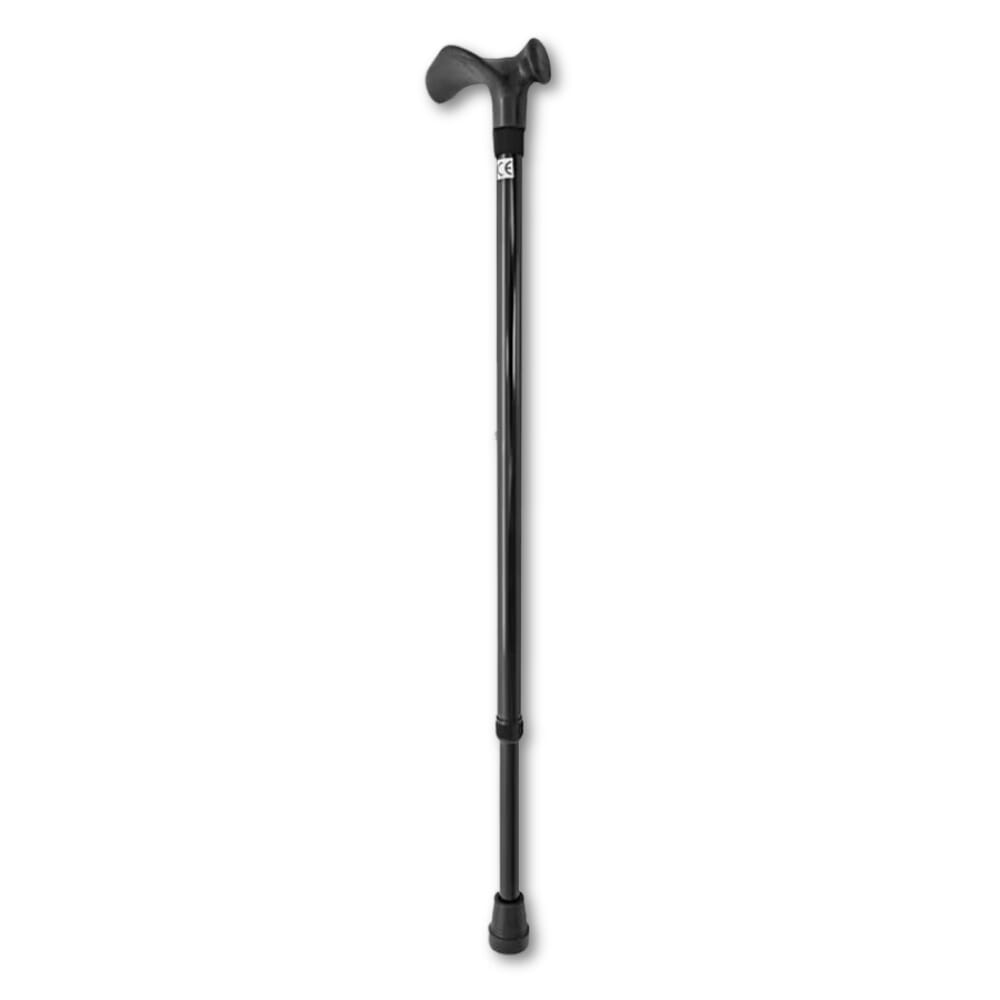
Walking sticks and canes are designed for people who need light support, usually on one side, rather than full weight transfer through both arms. The key distinction is between a standard single-point cane and a quad cane with a broader base. A single-point cane is easier to place and swing in a natural walking pattern, while a quad cane can offer more standing stability but may feel slower and bulkier in tight spaces.
Height adjustment is not a minor detail. If the handle sits too high, the shoulder elevates and the elbow stays too straight, which can increase upper-body tension. If it is too low, the user bends forward and loses some of the support benefit. Handle shape also changes comfort over longer periods, especially for users with arthritis or reduced grip strength, so compare whether the grip encourages a neutral wrist position.
Check the cane ferrule as carefully as the handle. The rubber tip is the part that actually meets the ground, and its condition has a direct effect on grip and confidence.
-
Choose a single-point cane for lighter support and easier walking rhythm.
-
Compare quad canes if standing balance is a bigger issue than speed or manoeuvrability.
-
Check height adjustment range so the aid can be set to the user, not just used at its default length.
-
Look at handle shape and grip comfort if the aid will be used for extended periods.
-
Inspect the ferrule design and replacement availability, as worn tips reduce traction.
Crutches
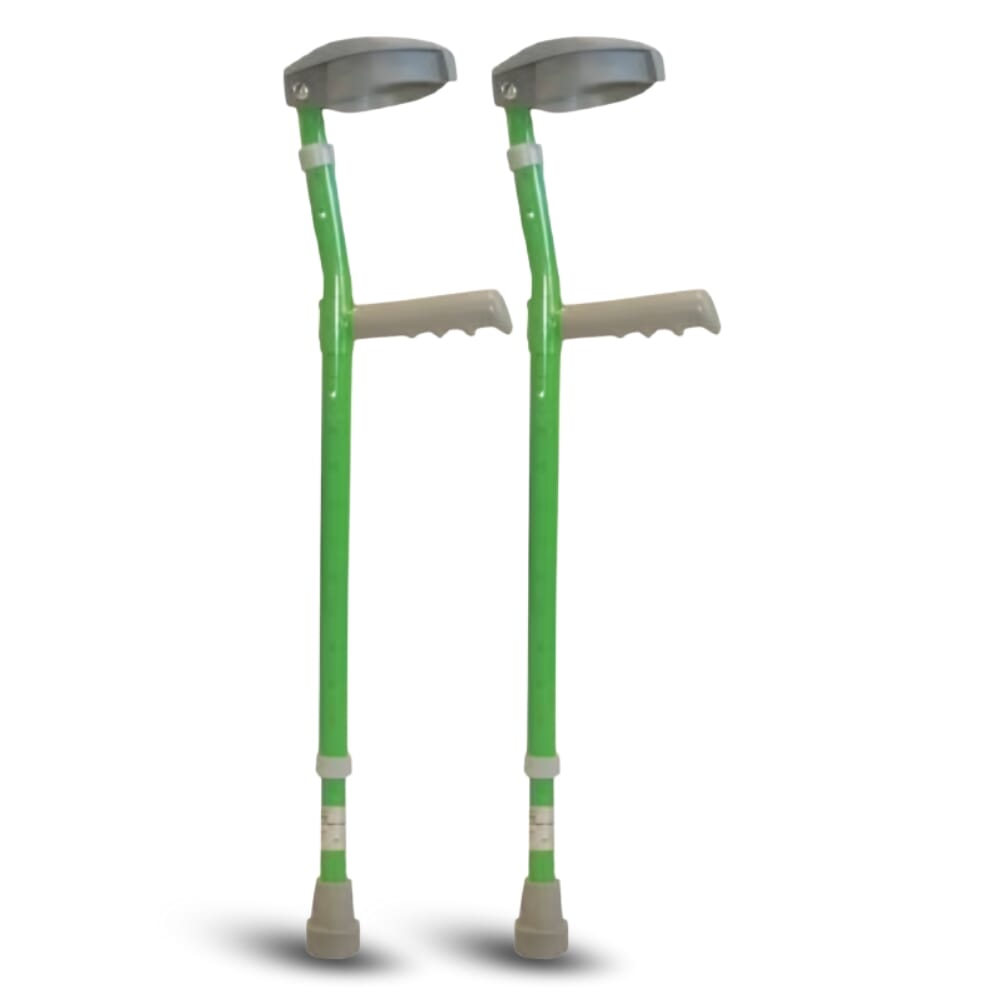
Crutches provide more unloading than a cane and are often used when one leg must take significantly less weight. The main categories are underarm crutches and forearm crutches. Underarm crutches can offer substantial support, but they must be fitted carefully to avoid pressure in the armpit area. Forearm crutches are often preferred for longer-term use because they allow a more upright posture and can feel more controlled once the user is accustomed to them.
Adjustment points should be checked in two places: overall height and handgrip position. These settings affect elbow bend, shoulder position, and how efficiently force is transferred through the arms. Also compare cuff design on forearm crutches, because cuff shape influences security during gait and how easily the crutch can be released for tasks such as opening doors or using stairs with a handrail.
| Type | Support level | Typical use | Key fit points | Trade-off |
|---|---|---|---|---|
| Underarm crutches | High | Shorter-term reduced weight bearing | Overall height, handgrip height | Poor fit can create upper-body pressure |
| Forearm crutches | Moderate to high | Longer-term daily use | Overall height, handgrip height, cuff fit | Requires more technique for some users |
| Platform crutches | High | Users unable to bear weight through hands | Platform height, strap position | Bulkier and less common |
-
Compare underarm and forearm crutches based on expected duration of use and control needs.
-
Check both height and handgrip adjustment, not just one measurement.
-
Avoid any fit that places body weight through the armpits.
-
Review cuff shape and retention on forearm crutches for daily practicality.
-
Consider platform designs if hand or wrist loading is limited.
Walking Frames and Rollators
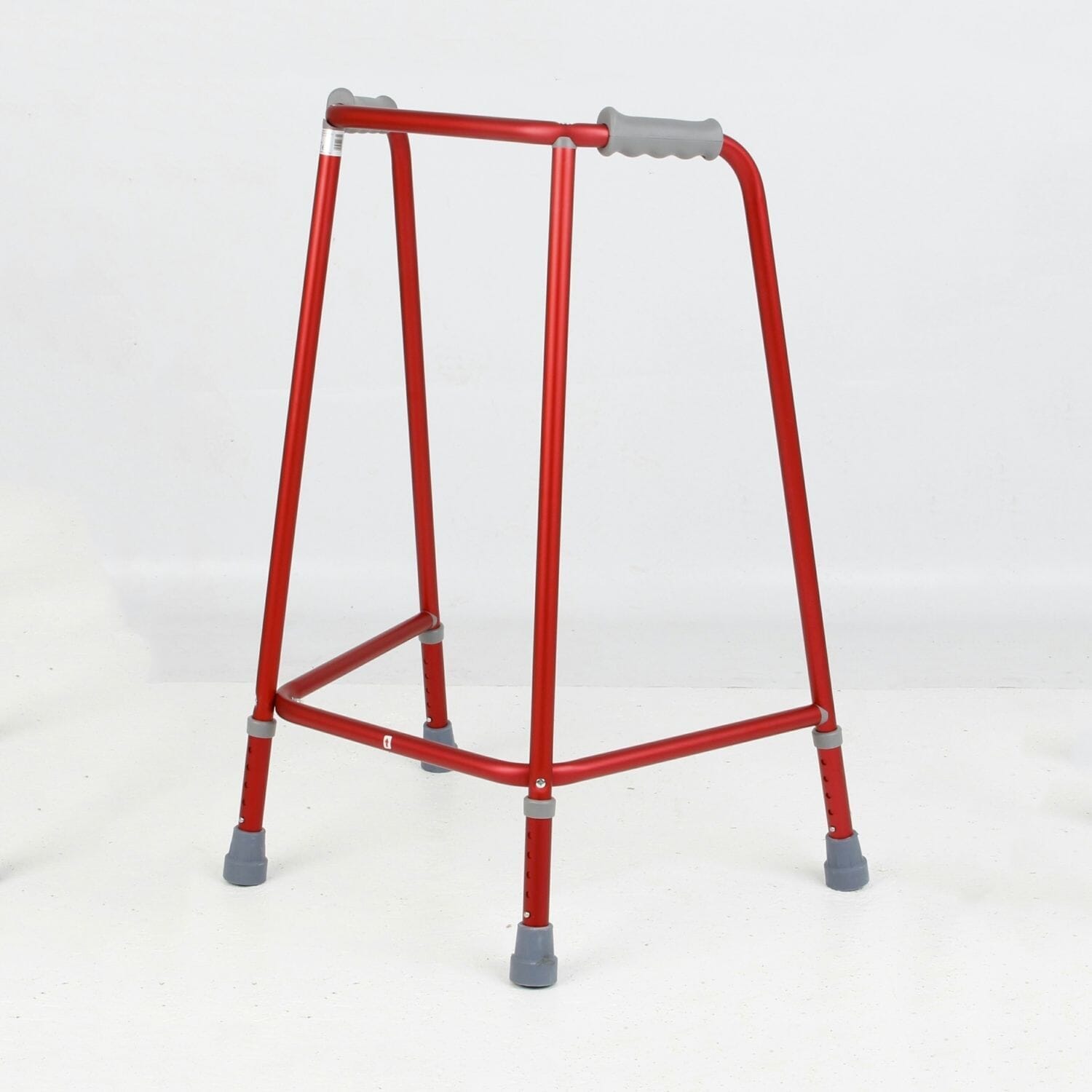
Walking frames and rollators suit users who need support on both sides. A standard walking frame offers a very stable base but usually requires lifting or a step-by-step movement pattern, which can slow walking and make outdoor use less practical. A rollator uses wheels to reduce lifting effort and can support a more continuous gait, but wheel size, brake performance, and frame width become much more important.
For indoor use, measure doorways, bathroom access, and turning spaces before comparing frame widths. For outdoor use, look at wheel size and surface handling, because small wheels can struggle on rough paving, thresholds, or dropped kerbs. Seat height and back support matter if the user will rest frequently, but a seat should not be treated as a substitute for proper walking support. Brakes should be easy to operate with the user’s actual hand strength, especially if arthritis or reduced dexterity is a factor.
A wider frame can feel more stable, but it may be less usable in the home if it catches on door frames or cannot turn easily in kitchens and bathrooms.
-
Choose a standard frame for maximum stability where slower movement is acceptable.
-
Compare rollators for users who need bilateral support with less lifting effort.
-
Measure doorways and turning spaces before buying, especially for indoor use.
-
Check wheel size and brake operation for outdoor routes and hand strength.
-
Assess seat height and resting features only after core support and fit are suitable.
Mobility Scooters
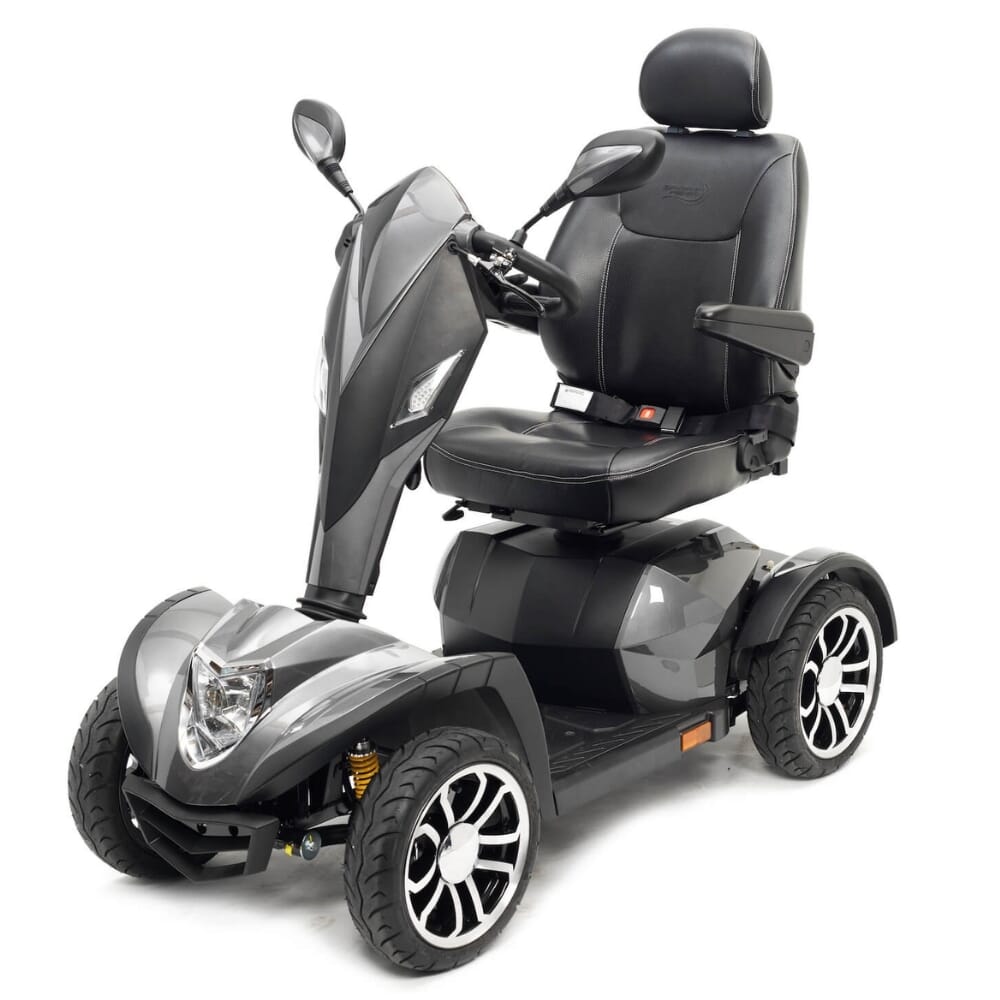
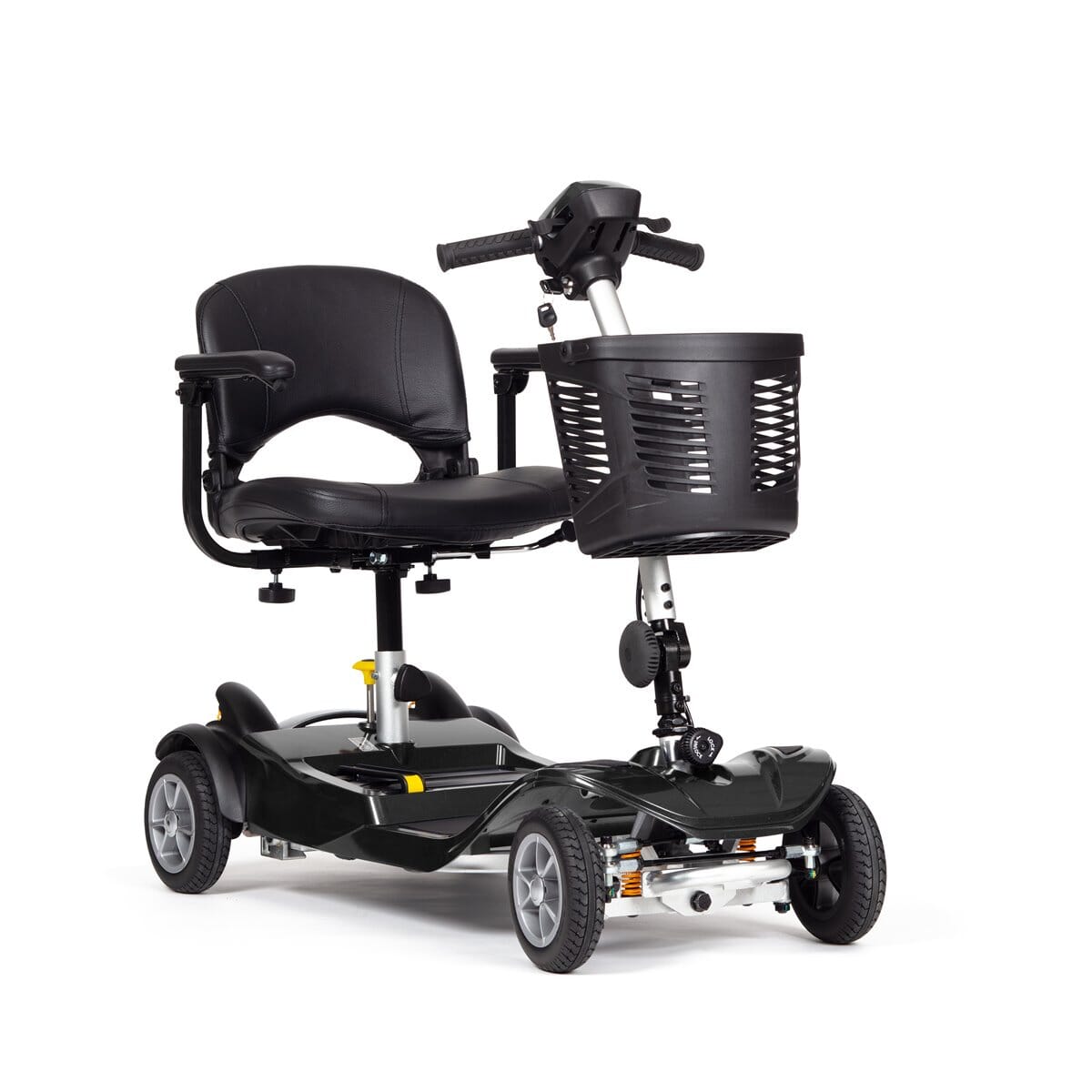
Mobility scooters are less about gait support and more about conserving energy and extending range for people who can transfer on and off safely. The most useful comparison points are scooter class, size, turning circle, battery range, and whether the scooter will be used mainly indoors, on pavements, or for longer outdoor journeys. A compact model may store more easily and turn better in shops, while a larger model may offer a more suitable ride for longer distances.
Comfort and control should be assessed in practical terms. Seat height, tiller adjustment, and ease of getting on and off affect whether the scooter can be used independently. Ground clearance and wheel configuration influence how the scooter handles uneven surfaces, but these features should be matched to the actual routes used rather than judged in isolation. Also check transport and storage requirements, including whether the scooter needs to be dismantled, folded, or lifted into a vehicle.
-
Match scooter size and turning circle to the places it will be used most often.
-
Compare battery range against real routine journeys, not occasional maximum trips.
-
Check transfer ease, seat position, and tiller adjustment for independent use.
-
Review storage, charging, and transport needs before choosing a larger model.
-
Consider surface type and route conditions when comparing wheel and clearance specifications.
Key Specifications to Compare
Walking Sticks
Walking sticks vary more in fit and function than their simple design suggests. The first specification to compare is height range, because the correct handle position affects posture, shoulder comfort, and how much weight can be transferred safely through the arm. Adjustable models suit users whose footwear changes their effective height, while fixed-height sticks can feel more rigid and predictable if the fit is exact. Handle shape also matters, particularly for users with arthritis or reduced grip strength. Derby, offset, and ergonomic handles distribute pressure differently across the palm and wrist.
Base design changes how the stick behaves on different surfaces. A single ferrule is lighter and easier to place precisely, which suits users who need cueing and mild support rather than a broad standing base. Quad-base sticks offer more contact with the floor and can stand more easily when released, but they are heavier and can catch on uneven paving if the base is too wide for the user’s gait. Material is worth checking as well, because aluminium keeps weight down, while wooden models are often chosen for fixed height and a more rigid feel.
Check the stated user weight limit and the adjustment increments, not just the maximum height, because small changes in handle position can alter wrist angle and stability.
| Specification | Single-point walking stick | Quad-base walking stick | Fixed-height walking stick |
|---|---|---|---|
| Stability level | Lower | Higher | Depends on tip design |
| Weight | Usually lighter | Usually heavier | Varies by material |
| Height adjustment | Common | Common | No |
| Best for | Mild support | Greater balance support | Exact fit and simple use |
-
Compare minimum and maximum handle height, plus how fine the adjustment steps are.
-
Check handle shape for palm pressure, wrist position, and grip comfort.
-
Look at ferrule or base type for indoor flooring, pavements, and uneven ground.
-
Confirm the stated user weight capacity before comparing style or finish.
Crutches
Crutches need closer specification checks because poor fit can shift pressure into the hands, underarms, or shoulders. For underarm crutches, the key measurements are overall height range and handgrip position. The top pad should not sit hard into the armpit, so the adjustment range must match the user’s body and footwear. Forearm crutches rely more on cuff diameter, cuff style, and handgrip position. An open cuff is easier to release quickly, while a closed cuff can stay attached to the arm when the hand is briefly freed.
Weight and frame material affect fatigue over a full day of use. Lightweight aluminium frames are common, but the practical comparison is not just total weight, it is how balanced the crutch feels during swing-through movement. Ferrule design is also important, because crutches place repeated angled loads on the tip. A larger or more durable ferrule can improve grip and wear life, especially for outdoor use. If one side is used more heavily than the other, replacement tip availability becomes a practical buying factor.
Underarm crutches should support through the hands and upper body, not through direct pressure in the armpits, which can cause discomfort and nerve compression.
-
Match the crutch type to the intended gait pattern and level of weight-bearing support.
-
Check handgrip adjustment separately from overall height adjustment.
-
Compare cuff diameter and cuff style on forearm crutches for security and ease of release.
-
Look at ferrule size and replacement availability for long-term use.
Rollators
Rollators differ most in wheel size, frame weight, folding method, and brake design. Wheel size changes where the rollator works well. Smaller wheels are often easier indoors, where turning space is limited and surfaces are smooth. Larger wheels cope better with paving joints, thresholds, and rougher outdoor ground because they roll over obstacles with less abrupt stopping. Frame width and seat height also need attention, especially for users who plan to use the rollator both inside the home and in public spaces. A wide frame may feel stable outdoors but awkward through narrow doorways.
Brakes deserve careful comparison because they affect both walking control and seated safety. Loop brakes are common, but the force needed to squeeze them varies. Users with weaker grip should check whether the brake action is manageable and whether the parking brake engages clearly. Seat dimensions, back support, and storage capacity matter if the rollator will be used for errands or longer outings. A seat that is too low can make standing difficult, even if the walking height is correct.
Measure the narrowest doorway and the boot opening of the car before choosing a rollator, because folded dimensions can still be awkward in daily use.
-
Compare wheel diameter for indoor manoeuvrability versus outdoor obstacle handling.
-
Check overall width, folded size, and lifting weight for storage and transport.
-
Assess brake lever force and parking brake operation, not just whether brakes are included.
-
Match seat height and seat width to the user’s standing and sitting ability.
-
Review basket or bag placement so it does not interfere with stride.
Mobility Scooters
Mobility scooters are usually compared by travel range, maximum user weight, top speed, and portability. Range figures should be read cautiously, because battery performance changes with user weight, terrain, temperature, and stop-start use. A scooter used on inclines or rough surfaces may deliver much less than the headline distance. Portable scooters often separate into lighter sections for car transport, but that convenience can come with smaller batteries and a more compact seating position. Larger pavement scooters generally offer more legroom and a steadier ride, but they need more storage space.
Ground clearance, turning radius, and tyre type have a direct effect on where the scooter can be used comfortably. Tight turning helps indoors and on crowded pavements, while better clearance reduces scraping on dropped kerbs and uneven paths. Solid tyres avoid punctures but can transmit more vibration than pneumatic tyres. Seat adjustability, tiller angle, and armrest position are also practical fit points, because poor driving posture becomes more noticeable over longer journeys.
Published range and speed figures are laboratory-style benchmarks, not guarantees of real-world performance on hills, rough ground, or in cold weather.
-
Compare real-use factors behind battery range, not just the quoted maximum distance.
-
Check dismantled weight or heaviest section if the scooter must go into a car.
-
Look at turning radius and ground clearance for the routes used most often.
-
Assess tyre type for puncture resistance versus ride comfort.
-
Confirm seat and tiller adjustment for legroom and driving posture.

Advantages and Disadvantages
Rollators
Rollators reduce the effort of walking by letting the user push rather than carry body weight through a single point of contact. Four wheels, hand brakes and a seat make them particularly useful for people who can walk but need regular pauses, or who feel less steady over longer distances. They also tend to encourage a more natural gait than a frame that has to be lifted, because the aid moves with the user rather than interrupting each step.
The trade-off is size, weight and turning space. A rollator that feels reassuring outdoors can be awkward in narrow hallways, small bathrooms or crowded shops. Braking technique also matters: if the handles are set too high or the user leans heavily forward, control on slopes becomes harder and shoulder fatigue can increase. For many buyers, the real question is not whether a rollator offers more support than a stick, but whether their home and routine can accommodate it.
-
Better for longer indoor or outdoor walks where frequent rests are useful
-
Easier to keep moving with than aids that must be lifted between steps
-
Bulkier to store, transport and manoeuvre in tight spaces
-
Brakes and seat add function, but also add weight and maintenance points
Check the width of doorways, hallways and the boot space of the car before choosing a rollator, because everyday practicality often decides whether it gets used.
Walking Frames
Walking frames provide a high level of stability because they create a broad base around the user. Standard non-wheeled frames suit people who need maximum steadiness over short distances, especially indoors on flat floors. They can help with transfers and controlled movement around the home, where pace is less important than confidence and balance.
Their main disadvantage is that they interrupt walking rhythm. A frame usually needs to be lifted and placed before each step, which demands upper-body effort and can be tiring for users with limited arm strength, painful wrists or reduced coordination. They are also less practical outdoors, where thresholds, uneven paving and kerbs can catch the frame and make progress slow. Two-wheeled versions reduce lifting effort, but they still need enough control to stop the aid moving too far ahead.
-
Offers more stability than a stick for users who need a broad support base
-
Often well suited to short indoor distances and transfers
-
Can be tiring to use if lifting is required at every step
-
Less convenient on uneven ground, thresholds and kerbs
Wheelchairs
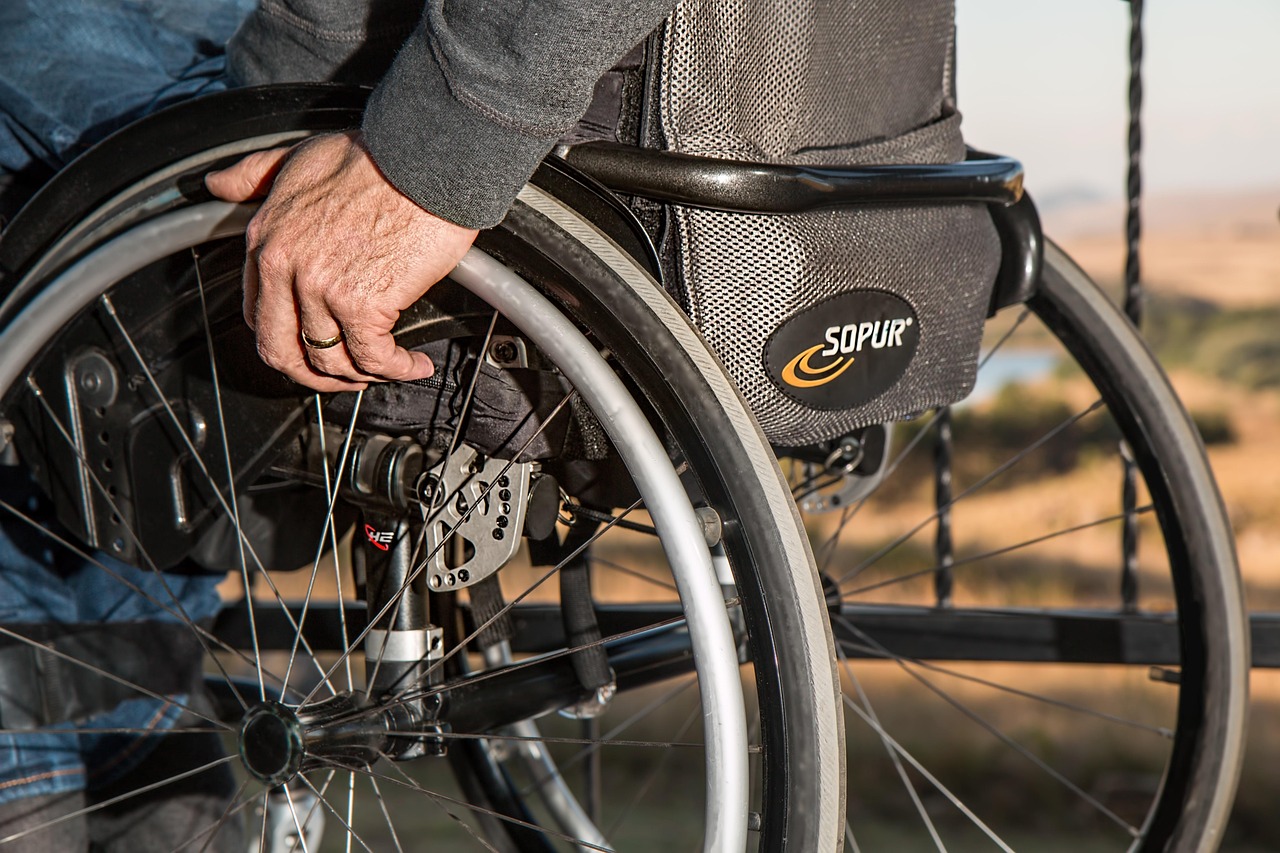
Wheelchairs are appropriate when walking distance is very limited, fatigue is severe, or support needs go beyond what a walking aid can provide. They remove the physical demand of standing and stepping, which can make outings possible for users who would otherwise stay at home. For some people, a wheelchair is not a full-time replacement for walking but a practical way to conserve energy for the parts of the day that matter most.
The disadvantages are mostly about environment and assistance. A wheelchair needs enough space for turning, enough strength or help for propulsion, and accessible routes without steps or narrow entrances. Even when the chair itself fits the user well, daily use can be restricted by transport, storage and the layout of the home. Buyers should also distinguish between occasional transit use, where another person pushes, and self-propelled use, which places different demands on arm strength and chair dimensions.
-
Reduces fatigue and extends range when walking is very limited
-
Useful for conserving energy rather than only replacing walking
-
Requires accessible spaces, storage and transport planning
-
Self-propelled and attendant-propelled use suit different needs
Mobility Scooters
Mobility scooters cover longer distances with less physical effort than manual aids, which makes them especially relevant for outdoor trips, shopping areas and local travel. They can restore independence for users who are comfortable seated and can manage steering controls, but who cannot walk far enough for daily errands. Compared with a wheelchair, a scooter often suits users who do not need close postural support and mainly want range.
Their limitations are significant indoors and in mixed environments. Scooters are larger, heavier and less suitable for confined spaces than most other mobility aids, and they are not practical for homes with tight turns or steps. They also depend on battery charging and safe storage, and they require enough hand control, vision and judgement to use them safely around pedestrians and road crossings. For many households, the issue is not only support level but whether there is a realistic place to keep and charge the scooter.
| Product category | Main advantage | Main drawback | Best suited to |
|---|---|---|---|
| Rollators | Walking support with brakes and a seat | Bulky in tight spaces | Users who still walk but need rests |
| Walking Frames | High stability indoors | Slower, more tiring gait | Short indoor distances and transfers |
| Wheelchairs | Removes the demand of walking | Needs accessible environments | Very limited walking tolerance |
| Mobility Scooters | Extends outdoor range with low effort | Storage and indoor use can be difficult | Longer local journeys while seated |
A mobility aid can be highly supportive in theory and still be the wrong choice if it does not fit through the bathroom door, into the lift, or into the car used every week.
-
Strong option for longer outdoor journeys where walking aids are not enough
-
Less suitable than smaller aids for indoor manoeuvring
-
Requires charging, storage space and safe access routes
-
Best for users who can manage seated controls and transfers
Our Top Picks
Crutches
Crutches suit users who need to offload one leg more substantially than a walking stick can manage. The main distinction is between underarm and forearm designs. Underarm crutches can provide higher weight transfer through the upper body, but they need careful fitting to avoid pressure in the armpit area. Forearm crutches are often easier to manoeuvre in tighter indoor spaces and can feel less bulky for longer-term use, particularly when the user needs one or two crutches depending on the level of support required.
Adjustment range matters as much as the crutch type. Handgrip height affects elbow bend and wrist loading, while overall height affects posture and stability. Grip shape, cuff style on forearm models, and ferrule size all influence day-to-day comfort on hard floors, pavements, and thresholds. If the user will be carrying the crutch in a car or storing it beside a chair, folded length or quick-adjust mechanisms can also make a practical difference.
Poorly fitted crutches can shift strain from the lower body to the wrists, shoulders, or underarm area, so adjustment points are not a minor detail.
| Type | Main support pattern | Typical use case | Key fit points |
|---|---|---|---|
| Underarm crutches | Higher weight transfer through upper body | Short-term recovery, greater unloading needs | Overall height, handgrip height, underarm clearance |
| Forearm crutches | Support through handgrip and forearm cuff | Longer-term use, indoor and outdoor mobility | Handgrip height, cuff position, cuff opening |
| Single crutch use | Asymmetrical support | Mild to moderate offloading on one side | Correct side use, grip height, ferrule condition |
-
Choose between underarm and forearm crutches based on how much weight needs to be taken off the leg and how long they are likely to be used.
-
Check both overall height adjustment and handgrip position, not just one measurement.
-
Look at cuff design and grip shape if forearm crutches will be used for extended periods.
-
Inspect ferrules regularly, as worn tips reduce traction on smooth or wet surfaces.
Wheelchairs
Wheelchairs are the more suitable option when walking distance, fatigue, pain, or balance make supported walking aids insufficient. For comparison shopping, the first split is usually between self-propelled and attendant-propelled models. Self-propelled chairs have larger rear wheels that allow the user to move independently, while attendant-propelled designs are generally more compact and may suit users who will always have assistance. That difference affects not only independence but also turning circle, transport weight, and how the chair handles kerbs and uneven ground.
Seat width, seat depth, and back support shape are central to fit. A chair that is too wide can reduce stability and make propulsion less efficient, while one that is too narrow can create pressure and restrict comfortable sitting time. Footrest adjustment, armrest height, and folding frame design also matter in everyday use, especially for transfers, dining tables, and car boots. If the chair will be used outdoors regularly, wheel size and tyre type deserve close attention because they affect rolling resistance and surface handling.
Match the wheelchair to the longest typical outing, not the shortest indoor trip, because fatigue often appears after distance rather than in the first few minutes.
-
Decide early whether the user needs self-propulsion or will always have an attendant, as this changes wheel size and frame layout.
-
Compare seat width and depth carefully, because fit affects posture, pressure, and ease of movement.
-
Check footrest and armrest adjustability if transfers in and out of the chair are a regular part of the day.
-
Consider folded dimensions and transport weight if the chair will travel frequently by car.
Mobility Scooters
Mobility scooters are designed for users who need seated support over longer distances and want to conserve energy outdoors. The most useful comparison point is scooter class and size. Compact travel scooters are easier to dismantle or store, but they usually have smaller wheels and are better suited to smoother surfaces. Larger pavement or road-capable models generally offer more stability, longer range, and a roomier seating position, but they need more storage space and a clearer route through gates, sheds, and communal entrances.
Battery range should be read as a practical estimate rather than a fixed promise. User weight, terrain, temperature, and stop-start driving all affect how far a scooter will travel between charges. Ground clearance, suspension, lighting, and tiller adjustment can matter as much as headline range if the scooter will be used on dropped kerbs, rougher pavements, or in poor weather. Turning radius is another specification worth checking, particularly for users who need to manoeuvre in supermarkets, hallways, or mobility scooter storage areas.
Published range figures are often measured in controlled conditions, so real-world distance can be lower on hills, colder days, or rough surfaces.
| Type | Strengths | Limitations | Best suited to |
|---|---|---|---|
| Travel scooters | Easier storage and transport | Smaller wheels, shorter typical range | Occasional outings, car transport |
| Mid-size pavement scooters | Better comfort and stability | Larger footprint | Regular local journeys |
| Larger road-capable scooters | Higher range and outdoor capability | More storage space needed | Longer outdoor trips and varied terrain |
-
Compare scooter size against storage space, doorway clearance, and transport needs before focusing on range.
-
Treat battery range as variable, especially if routes include hills or frequent stops.
-
Check turning radius and tiller adjustment for indoor or mixed-use manoeuvrability.
-
Look at wheel size and ground clearance if pavements are uneven or kerbs are a routine part of the route.
Walking Frames
Walking frames provide broad-based support for users who need more stability than a stick offers but do not want or need a rollator. Standard pick-up frames give maximum steadiness because the frame is lifted and placed with each step. Wheeled frames reduce the effort of lifting, which can help users with limited arm strength, but they require more control because the frame moves more readily. That trade-off between stability and ease of movement is usually the deciding factor.
Frame width, handle height, and overall weight influence whether the aid works well indoors. A frame that is too wide may catch on internal doorways or furniture, while one that is too low can encourage stooping. Some designs fold for storage or travel, and some include front wheels or glides to improve movement across indoor flooring. The right choice depends on whether the user mainly needs support for short transfers at home or repeated movement through several rooms during the day.
Measure the narrowest doorway and the space around the bed or toilet before choosing a frame, because indoor clearance often rules out otherwise suitable models.
-
Pick-up frames prioritise steadiness, while wheeled frames reduce lifting effort.
-
Check external width against doorways, bathroom access, and furniture gaps.
-
Handle height should support an upright posture rather than a forward lean.
-
Folding designs are useful where the frame must be stored between uses or transported.
Frequently Asked Questions
When is a walking frame more suitable than a walking stick?
A walking frame is usually the better choice when a single-point aid does not provide enough stability side to side. It suits users who need a wider base of support and who are walking short indoor distances where manoeuvrability matters less than steadiness.
Should I choose a standard walking frame or a wheeled frame?
A standard frame offers more control because all four feet contact the floor before each step, but it requires lifting with each movement. A wheeled frame reduces effort and can help maintain a smoother walking pattern, though it needs more control from the user to prevent it moving too far ahead.
A walking frame changes how weight is transferred through the arms and shoulders, so fit matters as much as frame style. Handgrips should sit at a height that allows a slight bend at the elbow when standing upright inside or just behind the frame. If the frame is too low, the user tends to stoop; if it is too high, shoulder tension increases and control usually worsens.
Indoor use also affects the right choice. Narrow hallways, thresholds, rugs, and bathroom doorways can make a wider frame awkward, especially if the user needs to turn frequently. Folding designs help with storage and transport, but the locking mechanism should feel secure and simple enough to operate without hand strain.
> **Tip:** Measure the narrowest doorway used every day before comparing walking frames, because overall width can rule out an otherwise suitable model.
| Type | Main support pattern | Typical use | Trade-off |
|---|---|---|---|
| Standard walking frame | Four-point contact | Maximum steadiness indoors | Must be lifted each step |
| Two-wheeled walking frame | Front wheels, rear feet | Reduced effort with good control | Less static stability than a standard frame |
| Three-wheeled frame | Lighter, more manoeuvrable support | Tight indoor turns and lighter support needs | Usually less stable than four-point designs |
- Choose a frame type based on how much support is needed and whether lifting the aid is realistic.
- Check handle height carefully, because poor fit affects posture and control immediately.
- Compare frame width with doorways, bathroom access, and turning space at home.
- Consider folding mechanisms if the frame will be stored in a car or small room.
### Mobility Scooters
How do I know whether a mobility scooter is suitable for everyday use?
The key question is where it will be used most often, indoors, outdoors, or both. Size, turning circle, and ground clearance affect daily practicality more than appearance, especially if the scooter must handle pavements, shop aisles, or home storage.
What should I check before buying a mobility scooter for outdoor journeys?
Battery range should be judged against the longest routine trip, with a margin for detours, hills, and colder weather. Seat comfort, controls, and ease of getting on and off also matter, because a scooter that is tiring to use often ends up used less.
Scooters vary sharply in footprint and intended environment. Compact models are easier to store and usually easier to manoeuvre in tighter spaces, while larger scooters generally prioritise outdoor stability and longer-distance comfort. The practical limit is often not the scooter itself but whether it fits through access points, into a lift, or into a vehicle if transport is needed.
Control layout deserves close attention for users with reduced hand strength or limited finger dexterity. Tiller adjustment, throttle style, and the force needed to operate brakes or controls can all affect confidence. A test of mounting and dismounting is just as important, because seat height and swivel functions can make transfers much easier.
> **Worth knowing:** Stated battery range is not a fixed real-world figure. User weight, terrain, temperature, and stop-start travel all reduce the distance achieved between charges.
- Match scooter size to the main environment, not just to occasional trips.
- Compare turning circle and overall dimensions if indoor use or storage is important.
- Allow a safety margin on battery range for hills, weather, and unplanned detours.
- Check whether the user can operate the controls comfortably for the full journey.
- Assess transfer ease, especially seat height and access space around the scooter.
### Wheelchairs
What is the difference between a self-propelled wheelchair and a transit wheelchair?
A self-propelled wheelchair has larger rear wheels so the user can move independently. A transit wheelchair has smaller wheels and is designed primarily for an attendant to push, which often makes it more compact for transport.
Which wheelchair features matter most for occasional use?
For occasional use, transport weight, folding method, and ease of lifting into a car are often more important than advanced adjustability. Seat width and back support still need to be appropriate, because poor fit quickly becomes uncomfortable even on shorter trips.
Wheelchair choice starts with who will provide the movement. If the user has the strength and coordination to propel independently, larger rear wheels can preserve autonomy and reduce reliance on others. If the chair will mainly be used for appointments, shopping trips, or travel with assistance, a transit design may be easier to handle in vehicles and tighter spaces.
Fit remains central even for part-time use. Seat width that is too narrow can create pressure at the hips, while a seat that is too wide can reduce trunk support and make posture less stable. Footrest position also matters, because poor leg support can increase pressure under the thighs and make transfers less controlled.
> **Tip:** Check the folded dimensions as well as the product weight, because a lighter wheelchair is not automatically easier to load if the folded shape is bulky.
- Decide first whether the chair will be self-propelled or attendant-propelled.
- Compare seat width and footrest position for comfort and posture.
- Check folded size alongside lifting weight if car transport is likely.
- Consider how often the chair will be used on uneven outdoor surfaces versus smooth indoor floors.
### Riser Recliner Chairs
Who benefits most from a riser recliner chair?
A riser recliner chair can help users who struggle to lower themselves into a seat or stand up again safely. It is particularly relevant when leg strength, balance, or joint pain makes repeated sit-to-stand transfers tiring or unreliable.
What should I look for in terms of fit?
Seat height, seat depth, and back support should match the user’s body size and usual sitting posture. If the seat is too deep, the user may not sit back fully; if it is too high or low, standing transfers usually become harder rather than easier.
These chairs are not just about powered movement. The chair has to support comfortable sitting for extended periods, so proportions matter more than the lift function alone. Armrest height affects how easily the user can push or steady themselves, and the recline position should not compromise safe return to standing.
Room layout is another practical constraint. Recline and rise functions need clearance behind and in front of the chair, especially in smaller living rooms. Power supply location also matters, because trailing cables can create a trip hazard in the very area where the user is standing up and sitting down.
> **Worth knowing:** A riser function helps with transfers, but it does not correct poor seat fit. An ill-fitting chair can still increase sliding, slumping, or difficulty standing.
- Prioritise seat height, depth, and armrest position before looking at powered functions.
- Check that the chair supports both comfortable sitting and safe standing transfers.
- Measure the space needed for recline and rise in the intended room.
- Consider cable placement and access to power to reduce trip risks.
Ready to Buy?
The final shortlist should match how the aid will actually be used, not just the level of support it offers on paper. At this stage, the useful comparison is between products that solve a similar mobility problem in slightly different ways, especially where storage, transport, indoor manoeuvrability, and setup effort affect whether the aid gets used consistently.
A sensible buying decision also accounts for progression. Some users need an aid for short-term recovery, while others need something that can adapt to changing strength, balance, or confidence over time. The categories below are often compared at the point of purchase because they sit close together in day-to-day use, even though they suit different patterns of movement.
Wheelchairs
A wheelchair becomes the more practical option when walking distance is limited enough that even a supportive aid still leaves the user fatigued, unstable, or unable to complete routine journeys. For many buyers, the key distinction is not simply whether a wheelchair is needed, but whether it will be self-propelled, pushed by another person, used mainly indoors, or folded regularly for car transport. Those differences affect rear wheel size, turning space, total weight, and how manageable the chair is when not in use.
Transit-style models and self-propelled models often look similar in listings, but they behave differently in everyday settings. A transit chair is generally easier to store and lift because it uses smaller rear wheels, while a self-propelled chair allows the user to move independently using larger rear wheels. If the chair will be used across pavements, thresholds, and longer outings, wheel size and seat dimensions matter as much as folded dimensions.
Measure doorways, hall widths, boot opening height, and storage space before buying, because a chair that fits the user can still be awkward in the home or car.
| Type | Rear wheel style | Typical use pattern | Main buying focus |
|---|---|---|---|
| Transit wheelchair | Small rear wheels | Attendant pushes user | Folded size, lifting weight, manoeuvrability |
| Self-propelled wheelchair | Large rear wheels | User propels chair independently | Seat fit, wheel access, outdoor practicality |
| Lightweight folding wheelchair | Varies by design | Mixed use, frequent transport | Carry weight, folding mechanism, storage |
-
Check whether the chair is intended for self-propulsion or attendant use, because this changes independence and wheel layout.
-
Compare seat width and depth against the user’s measurements, not just overall product width.
-
Look at folded dimensions if the chair will travel in a car or be stored between uses.
-
Consider where it will be used most, because indoor turning needs differ from pavement and outdoor use.
-
Review total weight if a family member or carer will need to lift it regularly.
Mobility Scooters
Mobility scooters suit users who can sit upright and operate controls but need help covering longer distances that would be difficult on foot. The buying decision usually comes down to where the scooter will be used most: indoors, on smooth local trips, or for longer outdoor journeys. That determines the balance between compact dimensions, battery range, and overall stability.
Portable scooters are often chosen for occasional outings because they can be dismantled or folded for transport, but that convenience can come with compromises in ride comfort and range. Larger scooters generally offer more stability and longer use between charges, yet they need more storage space and are less practical if they must be lifted into a vehicle. The right choice depends less on category labels and more on whether the scooter’s size fits the route, storage area, and transport method.
A scooter that is easy to transport is not automatically the most practical for daily use if the user finds assembly, disassembly, or charging awkward.
| Type | Main strength | Main limitation | Best suited to |
|---|---|---|---|
| Folding mobility scooter | Compact storage and transport | May prioritise portability over longer-distance use | Travel and occasional outings |
| Boot scooter | Can be dismantled for car transport | Requires handling separate parts | Car-based local trips |
| Larger mobility scooter | Greater range and outdoor stability | Needs more storage space | Frequent longer journeys |
-
Match scooter size to the main route, especially corners, pavements, and storage access.
-
Check whether it folds or dismantles, and whether the user or helper can manage that process safely.
-
Compare battery range against real routine journeys rather than ideal conditions.
-
Confirm charging arrangements, including where the scooter will be stored between uses.
-
Consider seat comfort and riding position if the scooter will be used for extended periods.
Riser Recliner Chairs
A riser recliner chair is not a travel aid, but it can be the purchase that makes standing transfers safer and less tiring at home. It is most relevant when the user struggles to move from sitting to standing without pushing hard through the arms, leaning excessively, or needing help from another person. In that context, the chair’s dimensions and movement pattern matter more than decorative finish.
The main buying question is fit. Seat height, seat depth, and back support need to match the user’s body so that the lift function starts from a stable sitting position and ends at a manageable standing angle. A chair that is too deep can make it harder to sit upright with the back supported, while one that is too high or low can make transfers less controlled. Buyers should also consider where the chair will sit in the room, especially if full recline needs extra clearance.
Treat a riser recliner as transfer equipment first and lounge seating second, because poor fit reduces the value of the lift function.
-
Prioritise seat height and depth, because transfer safety depends on starting posture.
-
Check the space needed behind and in front of the chair before installation.
-
Consider how often the lift function will be used compared with recline positions.
-
Review weight capacity and overall chair dimensions against the intended user and room layout.
-
Make sure the controls are simple enough for the user to operate consistently.
These categories tend to be the next step once simpler aids no longer cover the user’s daily routine. Buying well means matching the product to the actual journey, transfer, or seating task it needs to solve, then checking whether the home, car, and storage space support that choice.
The most important decision factor is how well the aid matches the user’s real walking pattern, environment, and need for stability, rather than how much support it appears to offer in isolation. A walking stick, rollator, crutch, or walking frame can each be appropriate, but the right choice is the one that fits everyday distances, surfaces, balance demands, and how much weight needs to be taken off the body.